
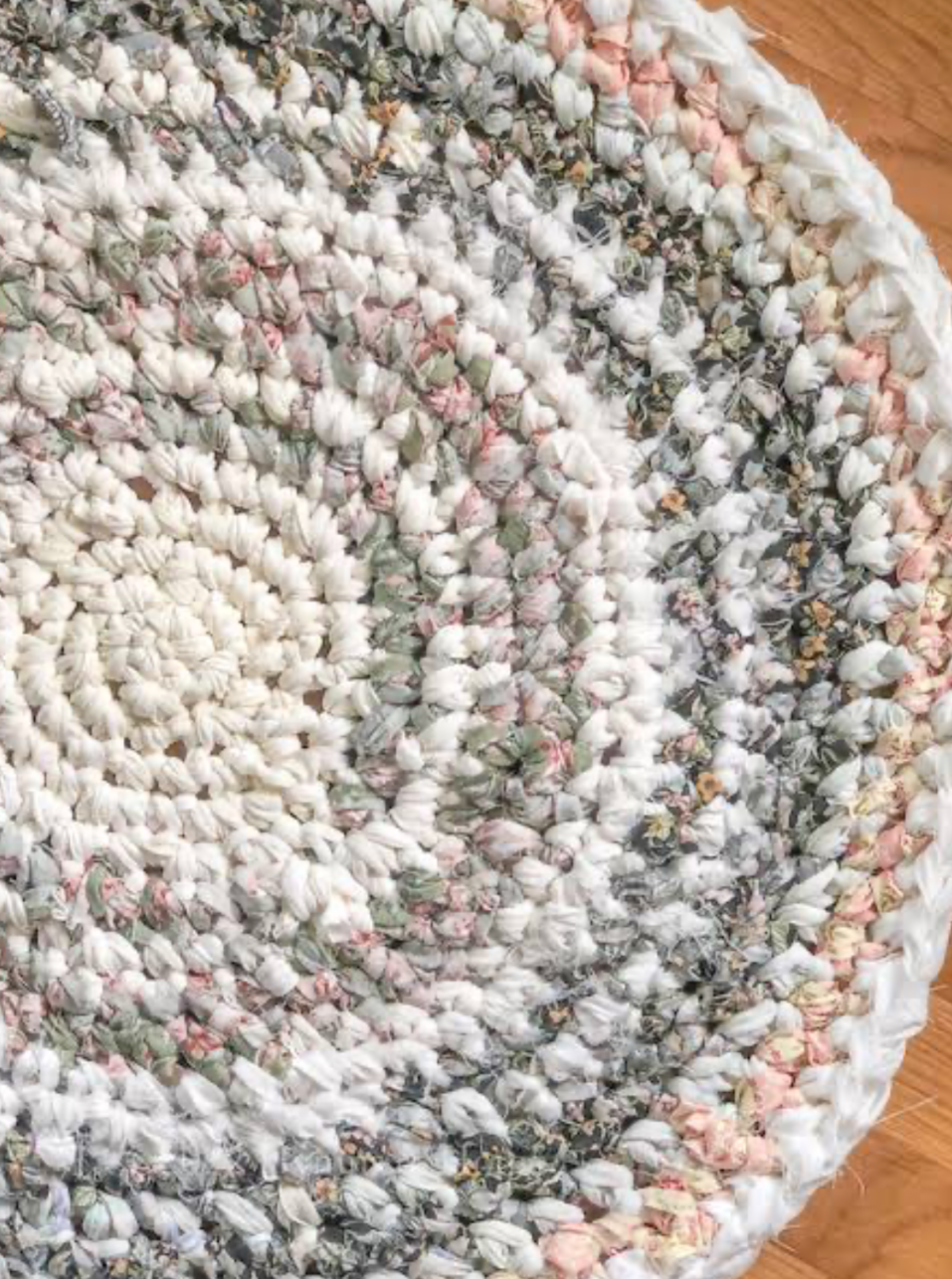
Are you looking for ways to upgrade your interior space and give it a new, more personal look? Then, you should consider adding handmade rugs and mats as accents.
These homemade floor mats are among the simplest yet most creative ways to add warmth, texture, and personality to a space. You can get crafty with upcycled materials or explore flea markets and treasure finds for other people’s unique creative rug projects.
With these handmade rugs and mats, you can redecorate your space on a budget without worrying about clashing aesthetics or impractical designs. In this guide, you’ll see diverse diy rug ideas for different home styles and how you can incorporate them even as a beginner.
Gather the Right Materials and Tools Before You Start
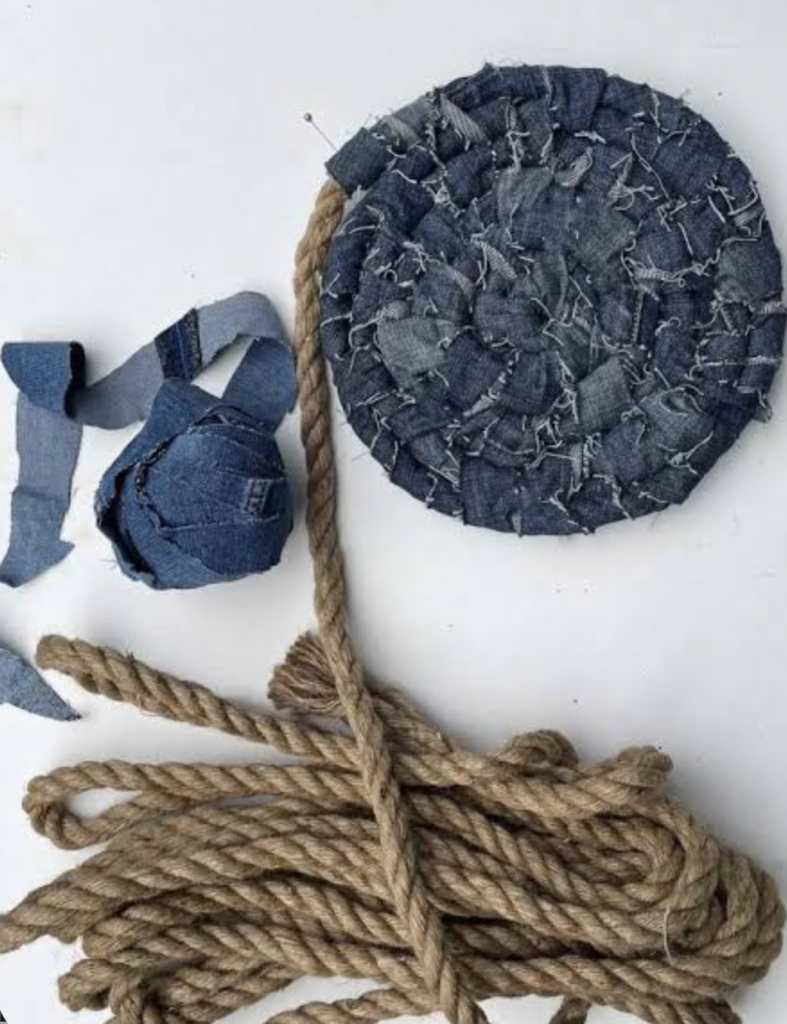
Before you start your new DIY project, gather the necessary rug-making materials. Some diy rug tools are essentials, while others are optional depending on the kind of rug or mat design you’re working on.
Common and essential supplies for handmade rugs include:
- Weaving materials: These can include yarns, wools, fibers, silk, or cotton. Generally, they’re materials that you can form into a flat surface.
- Fabrics and Strips: For upcycling, you can use old clothes, rags, and yarn blankets to make new mats.
- Ropes: Useful for braided and coiled handmade mats or rugs.
- Needles: You’ll need heavy-duty needles, like jean needles, to tack and sew the rug materials together
- Frames: For traditional rope-making, you’ll need a frame to secure your weaving materials while you work.
- Looms: A loom is a traditional weaving tool used to make mats, rugs, and blankets.
When buying these essential tools, look for durable products that will last.
You may also consider affordability, since the whole point of making a homemade rug or mat is to save money. Finally, choose eco-friendly rug materials for more rewarding, easier projects.
Choose a Rug Design That Matches Your Home Style
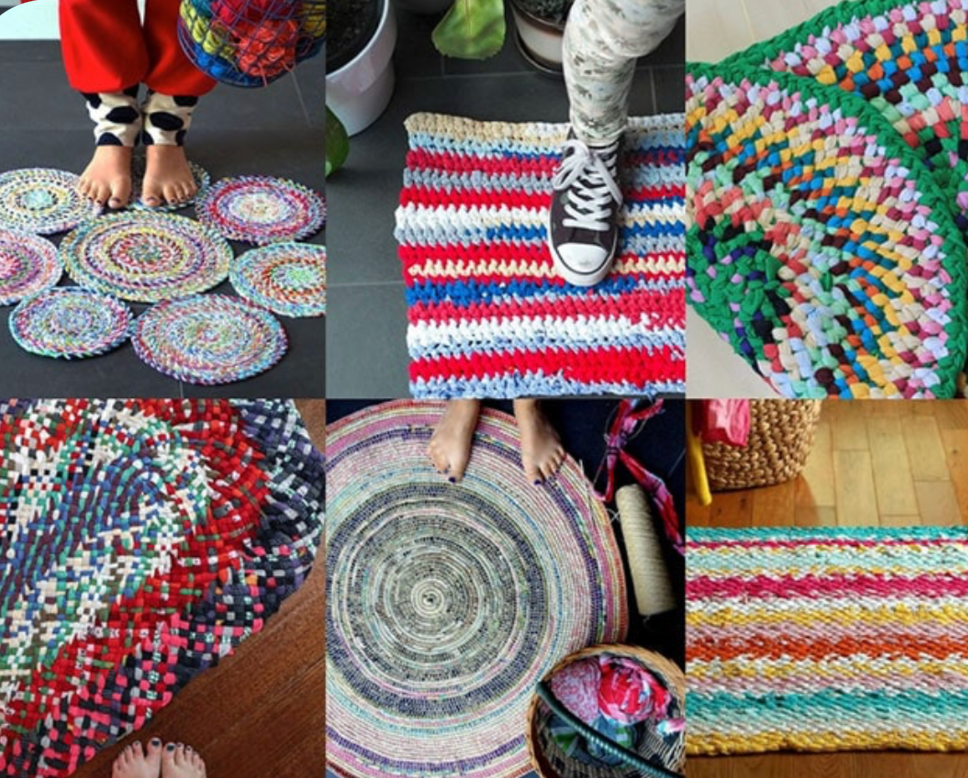
Because there are so many rug design ideas, it’s easy to get lost and overwhelmed with the creative options. So, here’s how you can stay grounded and choose the most ideal diy mat inspiration for your home style:
Choose By Shape and Size
Shape and size are the most important factors when choosing custom rug styles for your space. To pick a handmade rug or mat that’s just right, ensure it matches the space’s purpose.
For living rooms, rugs can be large or extra large; meanwhile, in the bedroom, smaller rugs that accentuate your bed’s legs are better fits than full-covered styles.
Square and rectangular rugs are better in rooms with similar furniture, while round rugs suit circular rooms and furniture better. But you can also mix and match shapes, like using circular rugs to soften hard, sharp, angular layouts.
Choose By Patterns and Color
You can choose your handmade rug patterns based on modern décordécor trends, traditional motifs, or simple reflections of personal taste. When in doubt, draw inspiration from your furniture and interior décordécor colors.
You can go monochrome or coordinate with complementary, triadic, or analogous schemes.
Choose By Texture
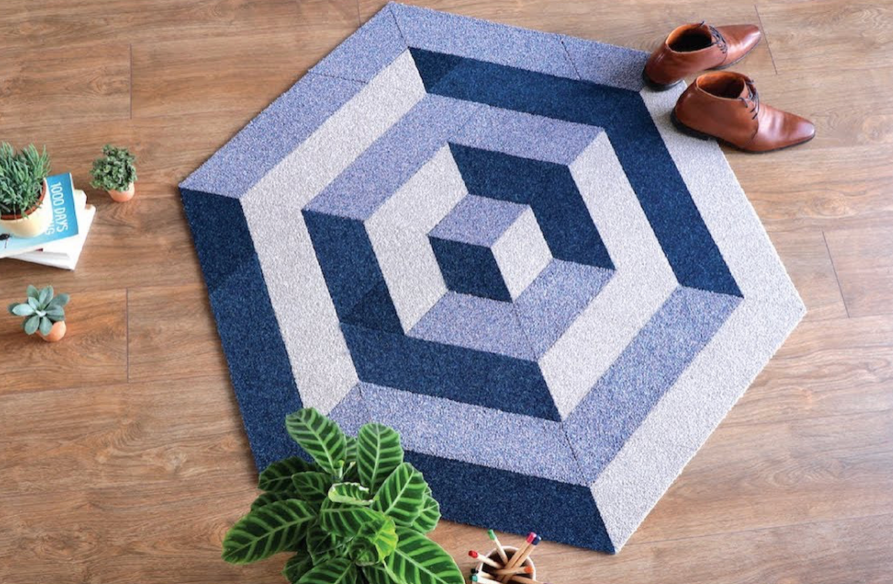
For texture, your lifestyle is the driving force behind your decision. Choose materials that match the space’s daily use. So, for high-traffic rooms, a durable, synthetic material is better than a woolen mat that’ll require consistent cleaning.
Cotton rugs in kitchens make sense, while silk materials can survive low-traffic areas like bedrooms.
Plan the Size, Shape, and Layout Before Crafting

Before you start crafting your handmade mats or rugs, always test out handmade rug layout ideas in theory. Visualize what you want with a sketch on a scale paper. Measure your available space and compare it with this standard diy rug size guide.
| Space | Ideal Size |
| By Room Size | |
| Small Rooms | 3×5” and 4×6” |
| Medium Rooms | 5×8” and 6×9” |
| Large Rooms | 8×10” and 9×12” |
| Grand Rooms | 10×14” |
| By Room Purpose | |
| Living Room | 6-8” wider than the sofa |
| Bedroom | 18-24 inches wider than the bed’s foot (for queen and king size) |
| Kitchen | 6-18 inches of floor space between rug and wall |
Use your sketchpad to plan your rug layout and ensure you get the best setup for your space. Also, measure your floor mat dimensions relative to the room’s purpose and space. The kind of runners you use for entryways would be out of place in bedrooms.
The goal is to ensure your finished pieces fit well with the space, such that they look intentional and not incidental.
Follow a Step-by-Step Process to Build the Rug
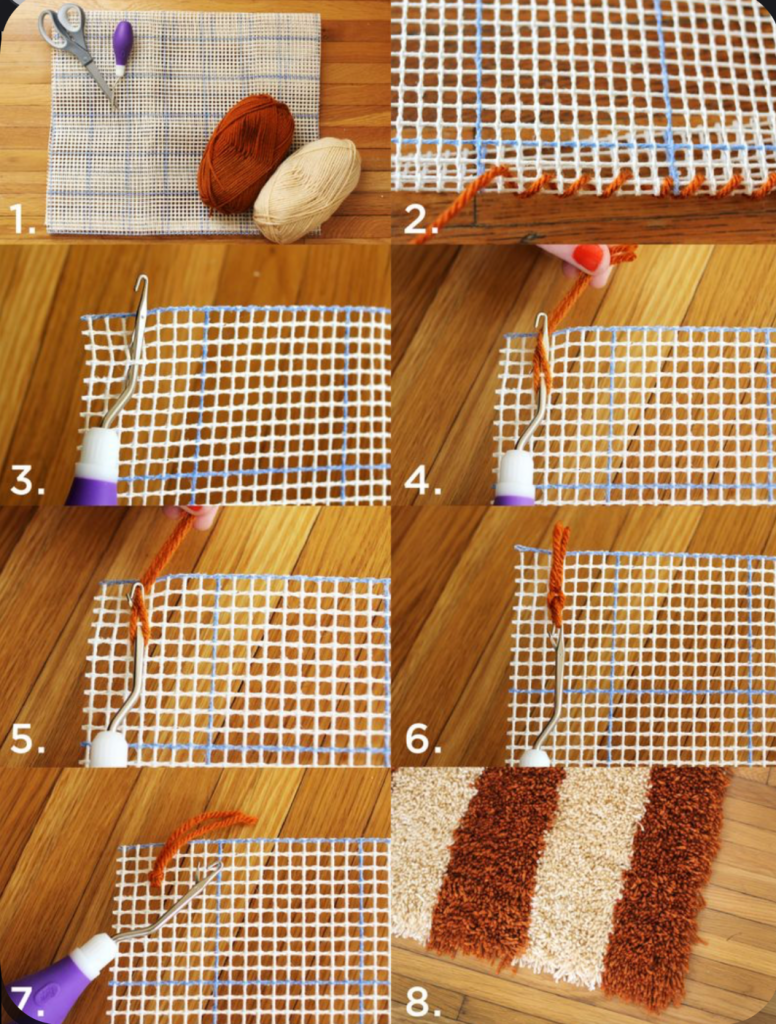
Although there’s no general handmade mat process because of the different rug and mat-making methods that exist, there are basic steps you’ll see in every diy rug tutorial.
Here’s an easy breakdown on how to make a rug for beginners.
Step One: Set up the Workspace
Prepare your workspace to ensure a clutter-free environment, and mentally prepare for the task ahead.
Set up your rug-making materials depending on the kind of rug or mat you’re making. You can set up your loom for weaving or your frame for tufting and knotting. Secure the material in the frame and prepare to work.
Step Two: Sketch your Design
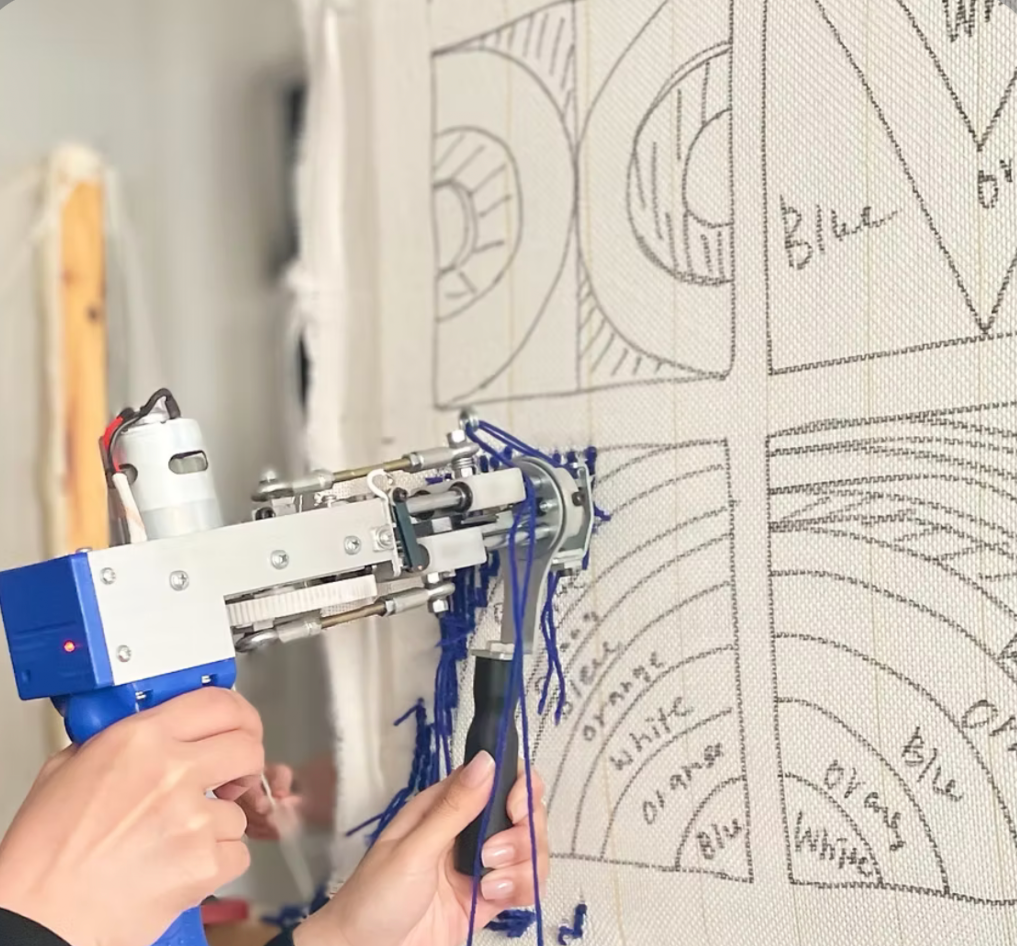
Sketch your preferred design in reverse on the back of your material. Drawing in reverse makes it appear correctly on the other side once you finish creating your handmade rug. If you’re tufting, use a tufting gun filled with yarn to bring the design to life.
Follow these step-by-step rug-making processes to ensure you complete a flawless design.
Step Three: Choose Method
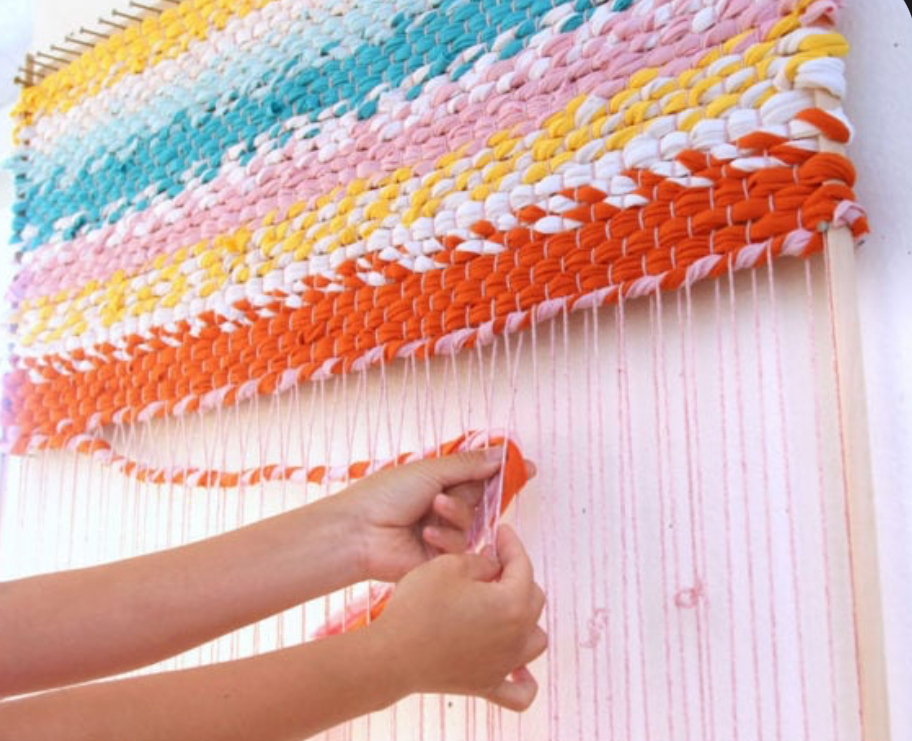
There are many types of handmade rugs, depending on the method used to make them. There’s braiding, weaving, knotting, and stitching. So, decide which method you want to use to make your rugs.
For braided rugs, you’ll need strips of fabric split into three or four. Then braid them with an intertwining pattern while securing each weft with a safety pin until you reach the end, where you’ll sew the hem.
For knotted rugs, you have to knot your fabric strips onto a mesh grid or use a crochet hook to form the knots on the grid until you reach the end of the strip. Keep adding new strips until you achieve your desired length.
If you’re into a more modern design, then tufting is the way to go.
Add Custom Details to Make the Piece Unique
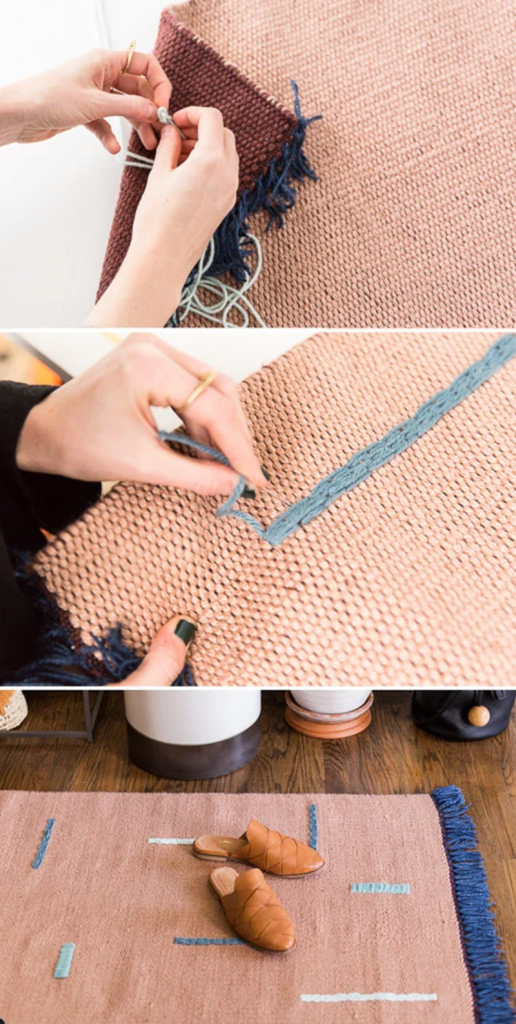
The best part of having custom-made rugs is having total creative control. You can add unique rug details, such as painted accents, mixed-and-matched textures, color combinations, and sentimental patterns, to the finished work.
If you want your decorative DIY mats to fit naturally into your space, ensure the designs match your existing furniture, accessories, and wall art. Personalized rug ideas stand out most when you let your creativity shine and add a sentimental touch to your work.
Handle Common Problems Without Ruining the Project
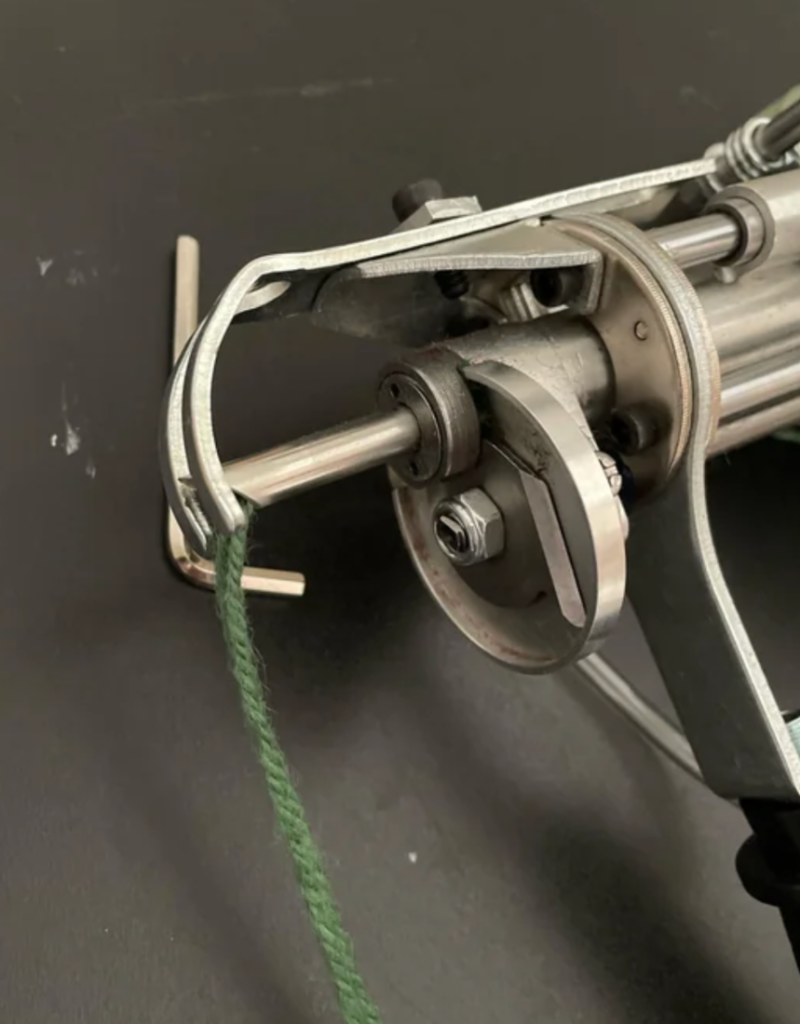
Always pace yourself and don’t be afraid to undo your design if you notice common handmade mat mistakes.
Rug-making problems are more common than you think, even for professionals. Your materials may develop uneven tension and loose threads while you weave, braid, or tuft. You may even face bigger problems like incorrect sizing and mismatched colors, but don’t stress about them.
Here are some diy rug troubleshooting tips to quickly correct these common mistakes:
- You can fix uneven rug weaving and tension imbalances by loosening the threads to find the weak area. Pull it tighter from the back until it’s firm, and for sagging areas, place a small piece of wood or cardboard behind the beam to tighten the area.
- On the other hand, you can loosen a tight edge by pulling the yarn to form a hill called bubbling until the area becomes loose. Once you’re done, beat the loose wefts down to create a flat surface.
- For uneven pile heights in tufting, check your gun settings to ensure the pile height alignment is locked.
- Ensure the materials in the frame are firm to reduce the risks of loose weaving, knotting, or tufting.
A little patience with small adjustments here and there would go a long way.
Care for Handmade Rugs So They Last Longer
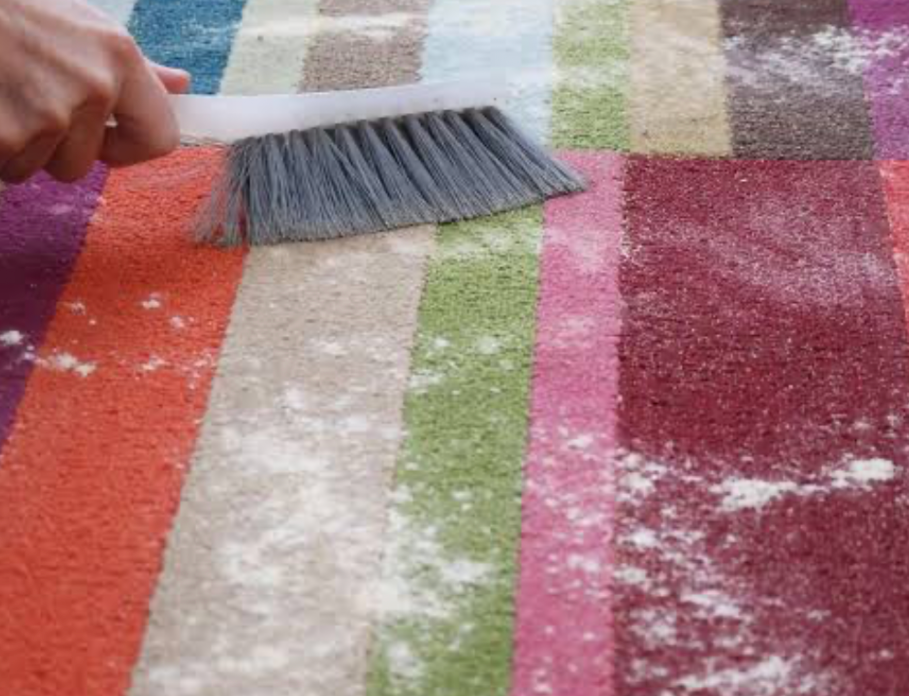
Your handmade rug requires a little more care than a ready-made rug because it’s typically made from upcycled materials and features delicate joinery. In this guide, you’ll learn how to clean DIY rugs without damaging their appearance or structure.
You only need to incorporate regular and DIY rug maintenance tips into one useful schedule.
- Focus on spot cleaning instead of washing the entire rug.
- Gently vacuum the rug every other week or once a month to keep it looking fresh and dust-free.
- Use gentle products that won’t damage your rug’s fibers or fade its colors.
Air out your rug at least three to four times yearly and always clean stains immediately.
Keep the Project Budget-Friendly Without Losing Style
Use budget-friendly rug ideas to streamline and manage costs while expressing your creativity through handmade rug-making crafts.
Instead of buying new yarns and materials, you can upcycle old textiles to make affordable handmade mats. If you really want to use new materials, buy discounted supplies and use simple patterns that require fewer products.
Low-cost home decor diy can be stylish and beautiful when done right. So, the next time you consider making cheap diy rug projects as useful home accessories, know that you don’t need to break the bank.
Look at Real-Life Ideas for More Rug-Making Inspiration
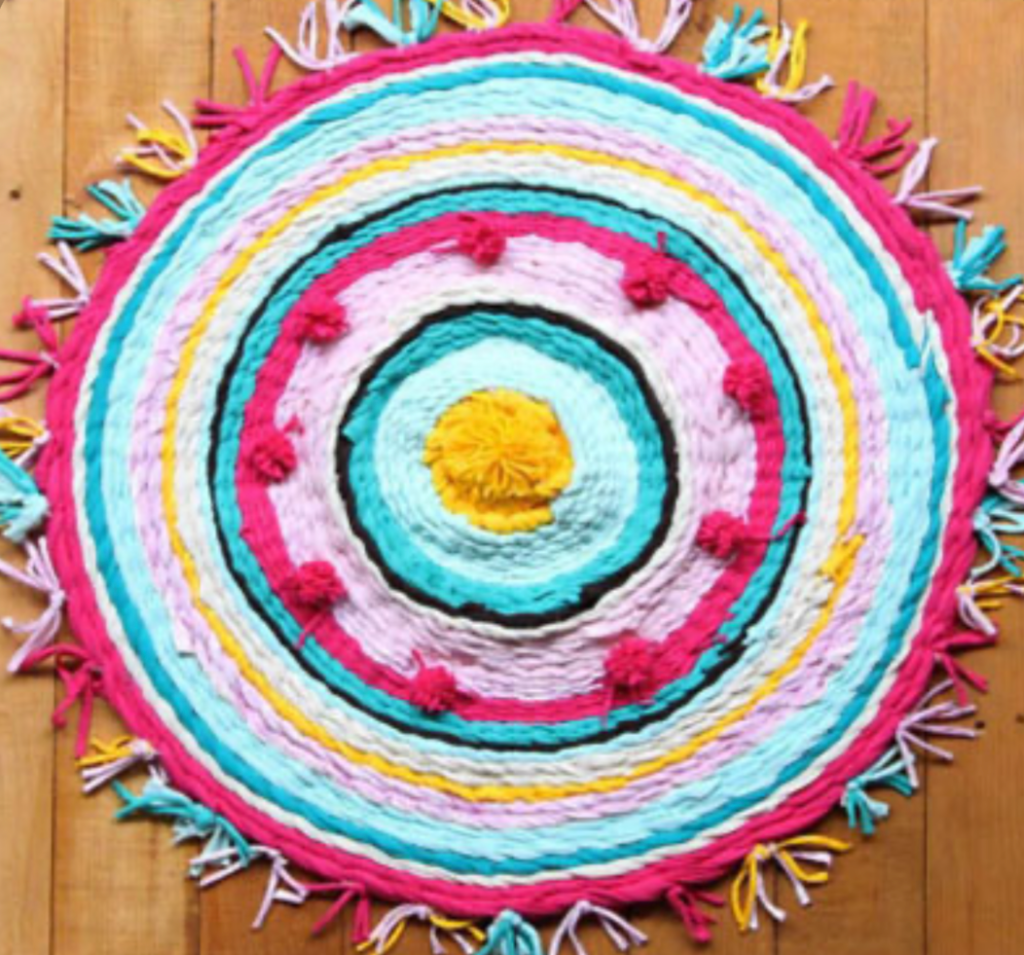
You can draw diy rug inspiration from other artisans and crafters with success stories. You’ll find useful handmade rug examples on online forums for arts and crafts, in lifestyle blogs, home decor magazines, and creative community ideas.
Check out sites like Pinterest, Raggedlife, YouTube, and Reddit forums for home decor rug ideas. Seeing these creative mat projects will spark ideas, help you refine your style, and boost your confidence to start a new project.
Conclusion
So, if you want to combine creativity, function, and personal style, DIY home rug projects are a sure way to achieve it. Besides the fact that you can use personalized floor mat ideas to infuse your space with a sentimental, personal touch, they also inspire.
As a beginner, you can use simple materials like ropes and old fabrics to bring your handmade rug and mat ideas to life. As you develop your skills, you can upgrade your easy handmade decor with more complex techniques, such as yarn tufting and loom weaving.
Get creative today and produce a beautiful piece for your home with the easy craft tips in this guide.

