
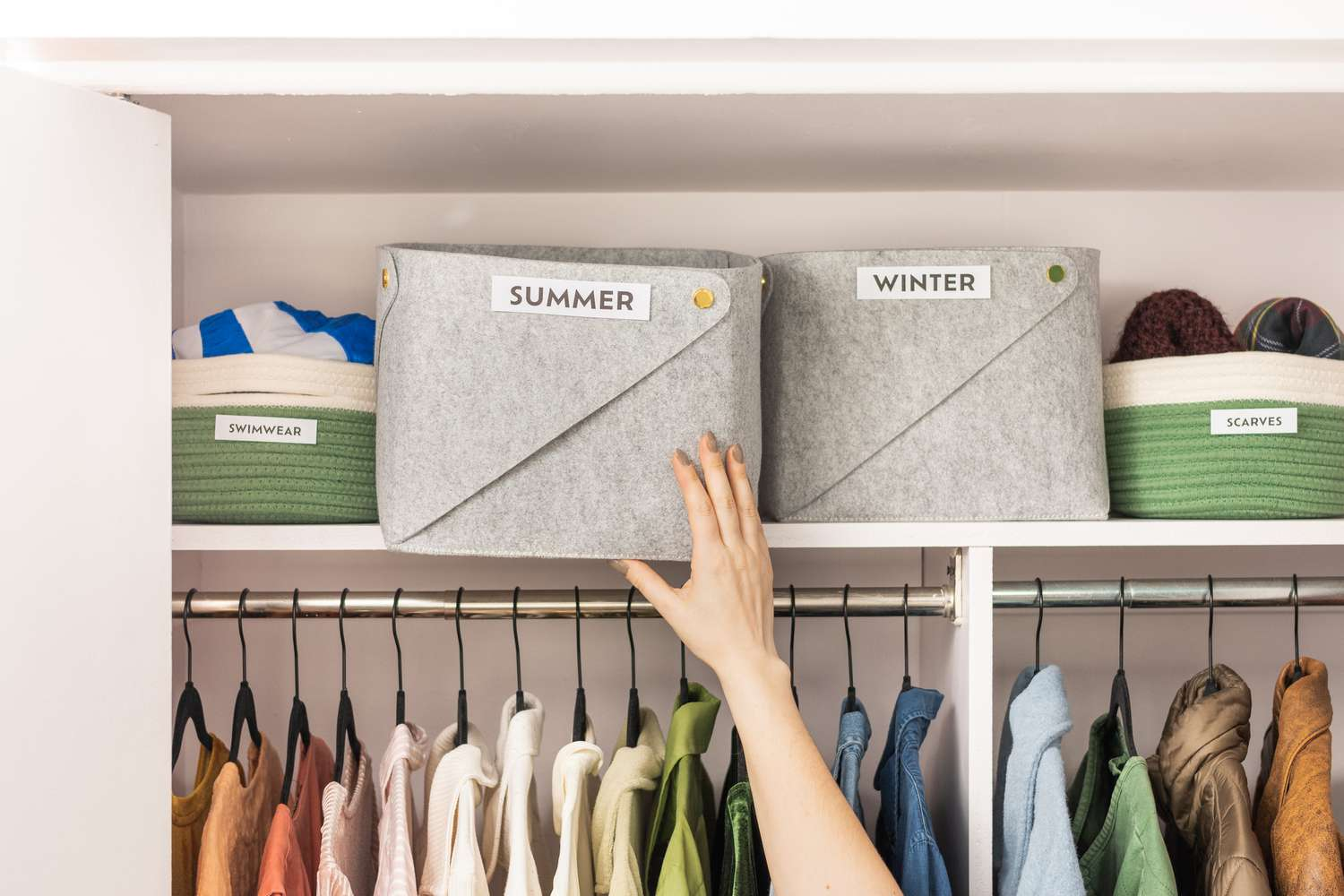
Smart closet labeling allows you to give your shirts, pants, and accessories a defined spot. In this guide, you’ll learn how to choose label styles, name zones, and match materials to different surfaces. You’ll also get plenty of real-life tips for seasonal reshuffles, repairs, and simple resets.
Closet Labeling Strategies For Smart Closet Organization
Can you take a moment to imagine just how nice it would be if you could just open your closet and immediately see where everything should go? One idea you can try out is placing simple labels on shelves, drawers, and bins. This helps to give a defined structure that supports a calm closet.
Another tip that helps in keeping your closet organized is having clear words on tags. This helps you to know which zone holds your workwear and which one holds your weekend favorites. This is one of the most practical wardrobe organization strategies that will make choosing outfits a lot easier for you. You can pair this with other smart storage solutions such as simple baskets and dividers.
Understanding Your Closet Organization Needs
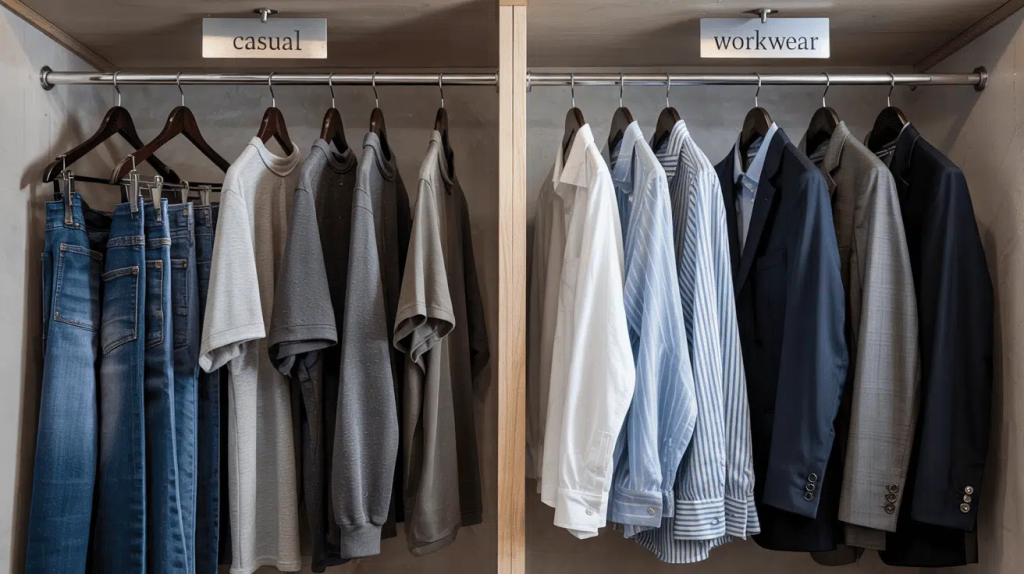
There are a number of factors you need to consider before choosing a labeling system for your closets. You need to assess your wardrobe categories, usage frequency, and storage habits. All of this will give you a better idea about your closet organization needs. You can start by placing pieces that you use every day at eye level, while those that you use rarely can be shifted higher or lower.
One tip that helps when you’re assessing your wardrobe is tracking your favorite outfits so that you know what deserves prime space. This then makes it easier for you to categorize your clothing into zones. Over time, all of the shelves and rails will come together to give you a personalized closet layout that feels easy to keep up.
Exploring Different Types of Labels and Materials
You can make use of a variety of materials for your closet labeling, however it’s best you go for a closet label material that balances both style and durability. For example, closet labels that are made from vinyl usually stick cleanly to plastic bins, while chalkboard stickers are usually a great fit for jars and boxes that may need to get relabeled.
If you want labeling that is durable and will last in the long term, one idea you can try out is the use of laminated tags or coated cards. This will help to shrug off dust and fingerprints. Handwritten cards, soft neutrals, or clear tags are also stylish label options that will make sure all your shelves are easy to scan at a glance.
DIY Closet Labeling: Creative and Budget-Friendly Ideas

Closet labels are also an avenue for you to showcase your creativity. For instance, one DIY closet label you can try out is using washi tape on the edges of your drawers. This type of closet label is usually very easy to read and can easily be changed later.
You can also make use of printable templates that have been slipped into card holders. They usually work well for shelves that shift with the seasons. Other creative label designs include using recycled cardboard or fabric scraps that match the rest of the room.
Selecting Between Pre-Made and Custom Labels
You can decide to go for ready-made custom labels if you are out of time, however, if you are someone that loves to play around with your font, colors, or wording, then it may be a better idea to go for custom label designs that are able to accurately reflect your style just how you want it.
Another important factor that can determine which one you go for is your budget and also the amount of energy that is being put into the project. With all that said, the goal at the end of the day is for you to achieve an organization that feels personalized to you and which you’ll love and enjoy using every day.
Step-by-Step Guide to Implementing Effective Labeling
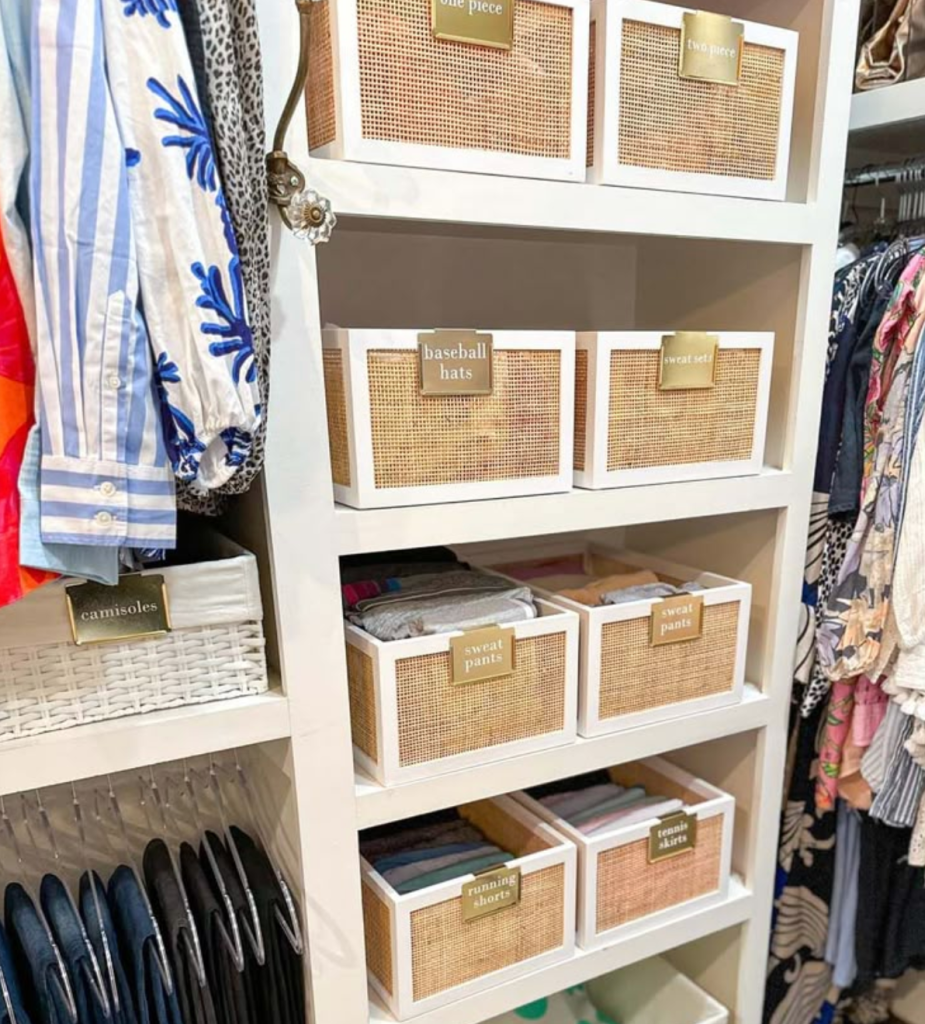
You need to follow the right steps during your closet labeling to ensure that it is effective and you get the best out of it. First, you have to make sure your closet is tidy. You can achieve this by separating what needs to stay, what should go, and what moves to storage.
Make sure that each category gets its own wording which should be placed where your eye can land easily. Some helpful tips that you can incorporate during your closet setup include lining labels to the same height. This is one of the most practical organization steps.
Maintaining Your Labeled, Clutter-Free Closet
Once you are done with putting all the closet labels in place, it is then important that you maintain that organization in your closet. You can carry out a short weekly reset where you place shirts, pants, and accessories back in their zones. As you continue to do this, you will notice that your wardrobe will always be clutter-free and match current outfits instead of past seasons.
You can also incorporate light label upkeep sessions where you can rewrite tags that are faded. When you are carrying out your seasonal closet check, you can move out any outdated clothing, move in your new favorites, and change any labels as necessary.
Real-Life Tips for Long-Term Wardrobe Organization
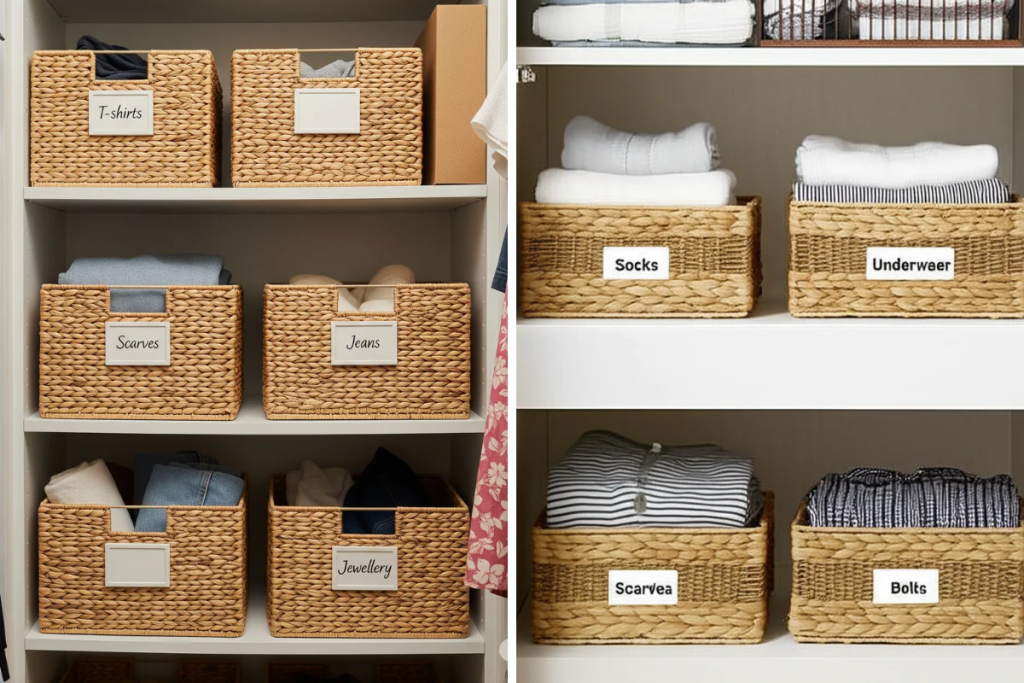
If you want your closet to stay neat for years, then you need to incorporate some good habits. One way you can maintain the organization of your closet in the long term is by swapping warm and cool weather clothes a few times a year. This will help to prevent your closet from feeling cramped.
Another tip that can help with maintaining your wardrobe is having a small repair zone, even if it’s just one labeled hook. Every so often, you should scan label names on drawers during your regular cleanups.
Transforming Your Closet Routine with Smart Labeling Strategies
With all the labeling strategies that have been listed in this article, you won’t have any problem giving your tops, bottoms, and layers a clear home that is very easy to remember.
Having a closet system that is efficient also provides you with a quick checklist that reminds you of what you actually have available. With all of this, your wardrobe planning becomes a lot easier.
Conclusion: Making the Most of Your Closet System
As we draw this closet labeling guide to a conclusion, keep in mind that the best closet systems feel calm because labels are able to guide what happens every morning and night.
With time, the right wording and placement will help to keep your categories clear. And this will result in a long-lasting organization.
Try out some labels in your closet today and share the before and after in the comments below!

